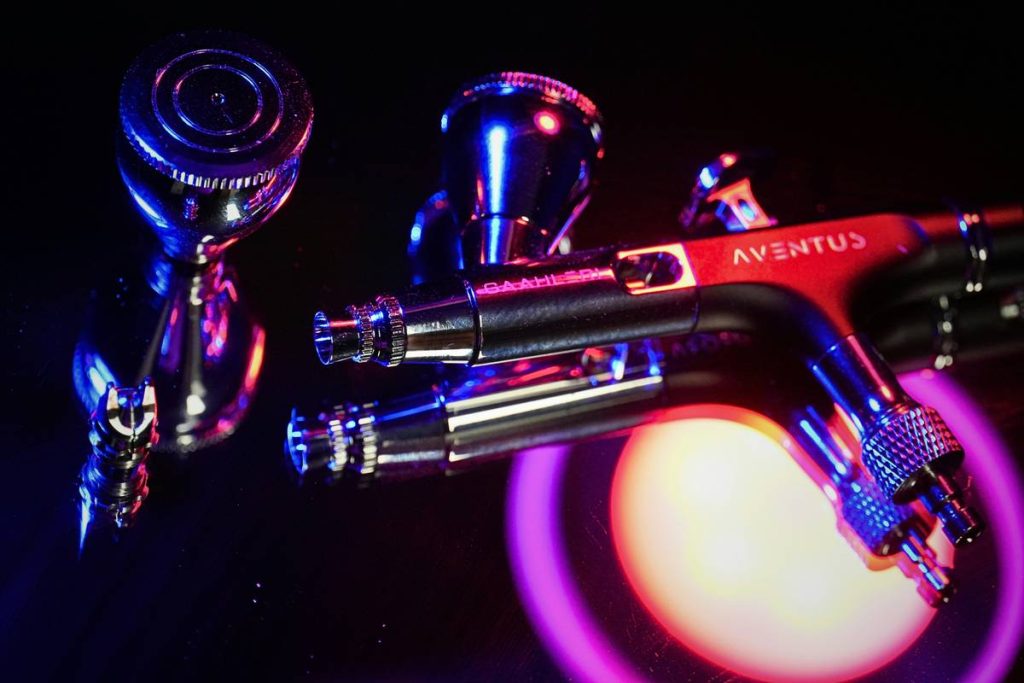
Ever spent 45 minutes meticulously airbrushing a custom model car—only to find dust specks, overspray haze, and stray cat hair baked into your finish like regret? Yeah. That was me in 2019, hunched over my garage workbench with zero ventilation, breathing in enough lacquer fumes to power a small go-kart. If you’re serious about airbrushing—whether for miniatures, automotive touch-ups, or fine art—you can’t wing it with duct tape and a box fan anymore. You need a spray booth accessory that *actually works*. And more importantly: you need to know how to use it right.
In this guide, we’ll cut through the fluff and walk you through exactly how to select, install, and maximize a spray booth accessory for your airbrush setup—with real-world tips from 12+ years of hands-on tinkering, fails I still cringe at, and gear tested across hobbyist garages and pro auto body shops. You’ll learn:
- Why most “DIY spray booths” backfire (and what to do instead)
- The 3 non-negotiable specs every spray booth accessory must have
- Step-by-step setup hacks that prevent ruined projects
- Real airflow data vs. marketing buzzwords
Table of Contents
- Why Spray Booth Accessories Matter (Beyond Just “Less Mess”)
- Step-by-Step: Installing & Using Your Spray Booth Accessory
- 7 Pro Tips Most Tutorials Skip (Including Filter Swapping Frequency)
- Case Study: From Dusty Disaster to Glass-Smooth Finish
- FAQs: Spray Booth Accessory Airbrush How-To
Key Takeaways
- A proper spray booth accessory isn’t optional—it’s critical for health, finish quality, and repeatability.
- Airflow velocity should be 100–150 feet per minute (FPM) at the work surface—verified with an anemometer, not guesswork.
- Use dual-stage filtration: pre-filter (for overspray) + HEPA (for microparticles).
- Never run your booth without adequate makeup air—this creates negative pressure and pulls contaminants inward.
- Position your airbrush 6–8 inches from the work surface, perpendicular to airflow direction.
Why Spray Booth Accessories Matter (Beyond Just “Less Mess”)
Let’s get real: if you’re using an airbrush indoors without a spray booth accessory, you’re gambling—with your lungs, your project, and your sanity. According to OSHA (Occupational Safety and Health Administration), airborne particulates from paints and coatings can cause chronic respiratory issues, especially with repeated exposure. And the EPA notes that improper ventilation contributes to VOC buildup—a silent hazard many hobbyists ignore until they get headaches or dizziness mid-session.
I learned this the hard way. In 2020, I tried “venting” my basement studio by cracking a window and pointing a $20 box fan outward. Result? My Warhammer miniatures looked like they’d been dipped in pollen, and I woke up with a dry cough that lasted three days. Not chef’s kiss. Not even close.
A true spray booth accessory does three things:
- Captures overspray before it settles on your work or floats back into your breathing zone.
- Exhausts contaminated air safely outside or through multi-stage filtration.
- Maintains consistent laminar airflow so paint lands evenly—not streaked by turbulence.
Without these, you’re just rearranging chaos. And trust me—your future self (and your client, if you’re doing paid work) will thank you for investing in proper containment early.
Step-by-Step: Installing & Using Your Spray Booth Accessory
Step 1: Choose the Right Size & Type
Don’t grab the cheapest Amazon special labeled “spray booth.” Look for units rated for airbrush use—not just general painting. These typically feature lower CFM (cubic feet per minute) requirements (50–150 CFM) and finer filtration. Popular trusted brands include Master Airbrush, Paasche, and Iwata for hobbyist-scale booths.
Step 2: Verify Airflow Direction & Velocity
Your booth should pull air away from you and across the work surface—not upward or sideways. Use a digital anemometer (like the Extech AN50) to confirm 100–150 FPM at the front opening. Less? Overspray lingers. More? You’ll disturb wet paint.
Step 3: Install Dual Filtration
Layer it: start with a fiberglass pre-filter (captures >80% of wet overspray), then a MERV 13 or HEPA filter behind it for submicron particles. Replace pre-filters weekly during heavy use; HEPA every 3–6 months.
Step 4: Seal Gaps & Add Makeup Air
If exhausting outdoors, open a nearby window slightly or install a dedicated makeup air inlet. Without it, your booth creates negative pressure, sucking in dusty room air from under doors or through cracks—defeating the whole purpose.
Step 5: Position Your Airbrush Correctly
Hold the airbrush 6–8 inches from your subject, moving parallel to airflow direction. Never spray against the current—that kicks up settled particles.
7 Pro Tips Most Tutorials Skip (Including Filter Swapping Frequency)
- Lighting matters as much as airflow. Use LED strips with 5000K color temperature on both sides of the booth to eliminate shadows that hide imperfections.
- Run the booth 2 minutes BEFORE spraying. This clears ambient dust from the chamber.
- Wear an N95 mask—even with a booth. Booths reduce exposure but don’t eliminate it 100%. OSHA recommends respiratory protection for all solvent-based paints.
- Line the interior with removable plastic sheeting. Makes cleanup faster and protects the booth shell from chemical degradation.
- Never use paper towels as filters. They disintegrate when wet and create more airborne fibers. (Yes, someone actually tried this. RIP their Gundam kit.)
- Ground your booth if using metal components. Static attracts dust—especially in dry climates.
- Test with water first. Before committing to paint, mist distilled water to check for airflow dead zones.
Grumpy Optimist Corner
Optimist You: “Follow these tips and your finishes will look pro-level!”
Grumpy You: “Ugh, fine—but only if I get to spray without sounding like my laptop fan during a 4K render. Also, no more ‘ventilation’ via screen door. Ever.”
Case Study: From Dusty Disaster to Glass-Smooth Finish
Last year, I took on a commission: hand-painted leather jackets for a punk band’s tour merch. First attempt? Done in my unvented utility room. Outcome: visible lint, uneven coverage, and a client who politely said, “It looks… textured.” (Translation: ruined.)
I invested in a Master Airbrush Model #MB-15T—a 15″x15″ benchtop spray booth with dual filters and 120 CFM exhaust. Key changes:
- Mounted booth near an exterior wall with direct venting
- Added 5000K LED strips above and beside the chamber
- Ran booth 3 mins pre-spray, used N95 mask
Result? The next batch had flawless gradients and zero particulate contamination. The band posted it on Instagram with “✨studio-quality magic✨”—and I kept the gig. ROI: priceless. Booth cost: $229. Client retention value: incalculable.
FAQs: Spray Booth Accessory Airbrush How-To
Can I use a regular fan as a spray booth accessory?
No. Box fans lack directional control, filtration, and consistent airflow. They stir up dust rather than contain it. OSHA explicitly warns against improvised ventilation for aerosolized chemicals.
How often should I replace filters?
Pre-filters: every 5–10 hours of use (or when visibly coated). HEPA/MERV: every 50–100 hours, or if airflow drops noticeably. Track usage in a logbook!
Do I need external venting?
For water-based paints in small quantities, filtered recirculation is acceptable. For solvent-based paints (lacquers, urethanes), you must vent outdoors per EPA regulations.
What’s the ideal distance between airbrush and work surface?
6–8 inches. Closer increases risk of runs; farther reduces control and increases overspray drift.
Is a spray booth really necessary for small projects?
Yes—if you care about finish quality or long-term health. Even miniature painters using acrylics benefit from particle control. Think of it like wearing seatbelts: you might not crash today, but why risk it?
Conclusion
A spray booth accessory isn’t a luxury—it’s the backbone of clean, safe, repeatable airbrush work. Whether you’re restoring vintage toys or painting custom sneakers, skipping proper ventilation sacrifices both your craft and your well-being. By choosing the right booth, verifying airflow, using dual filtration, and positioning your tool correctly, you’ll avoid the dusty disasters that haunt beginners (and some pros—I see you, 2019 me).
Remember: great airbrushing isn’t just about steady hands. It’s about controlling your environment so every stroke lands exactly where it should—smooth, sharp, and speck-free. Now go reclaim your garage from chaos. Your next masterpiece is waiting.
Like a Tamagotchi, your spray booth needs daily care: feed it clean filters, give it fresh air, and never ignore its little red “replace me” light.
Smooth arcs of color fly,
Dust dares not land in the flow—
Booth hums just right.